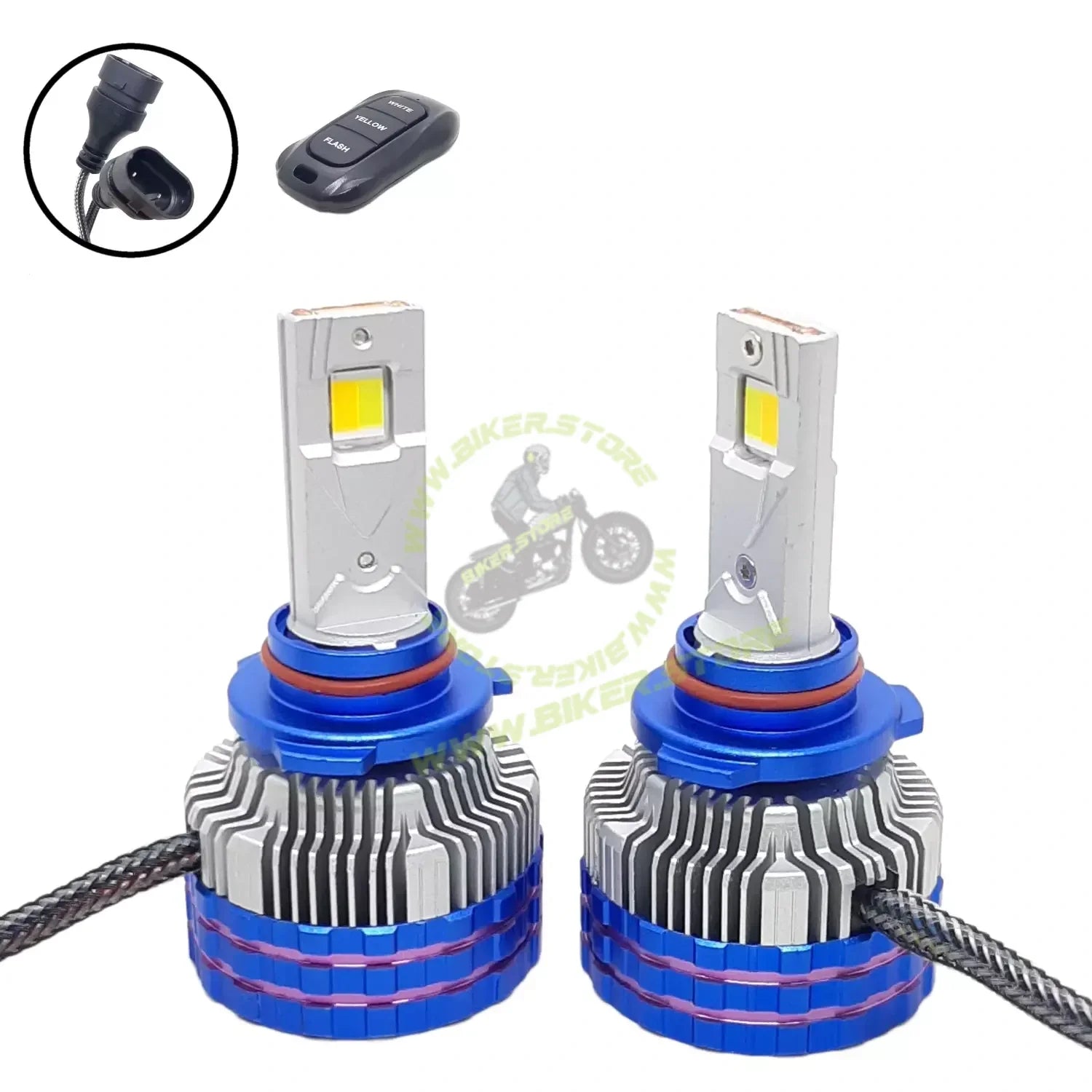
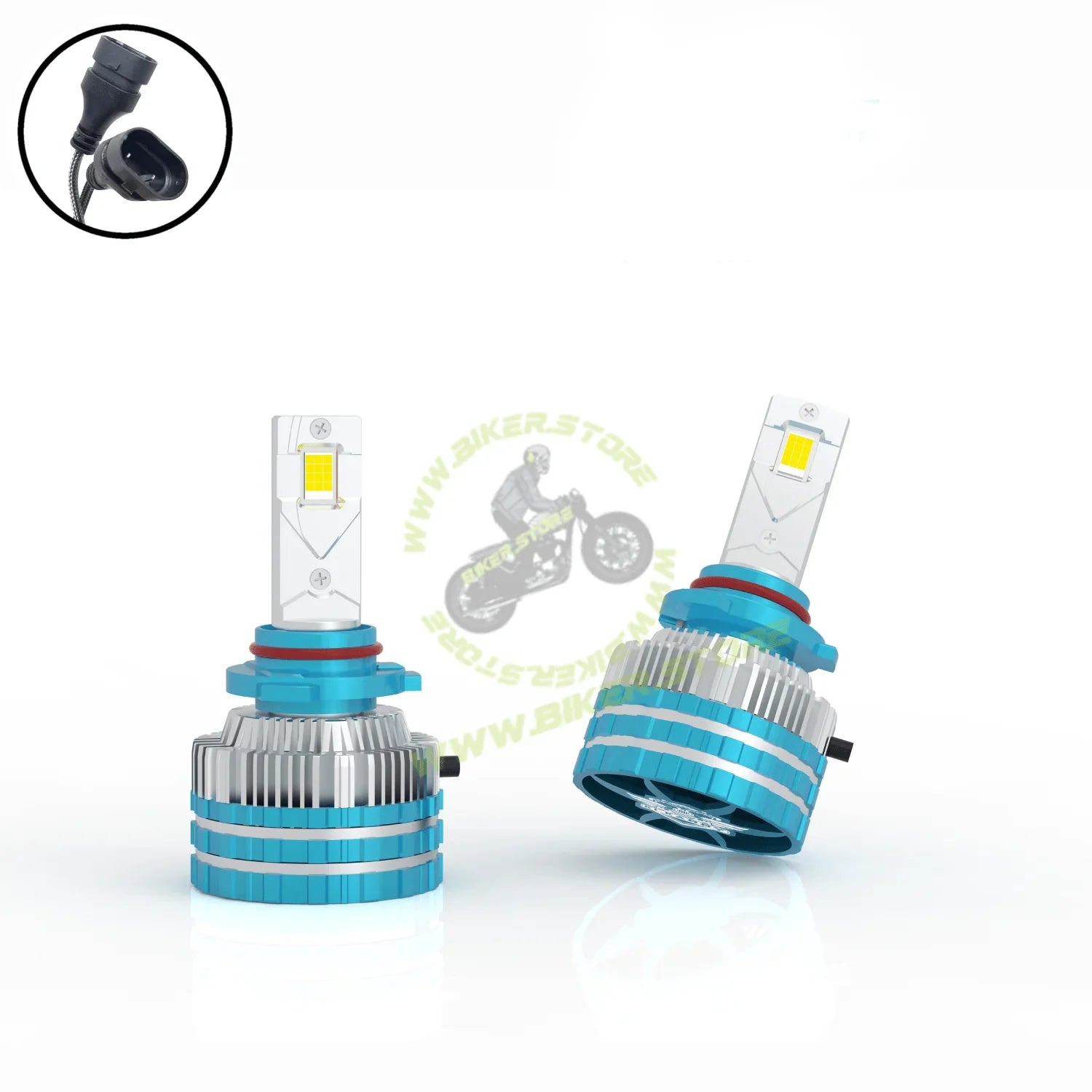
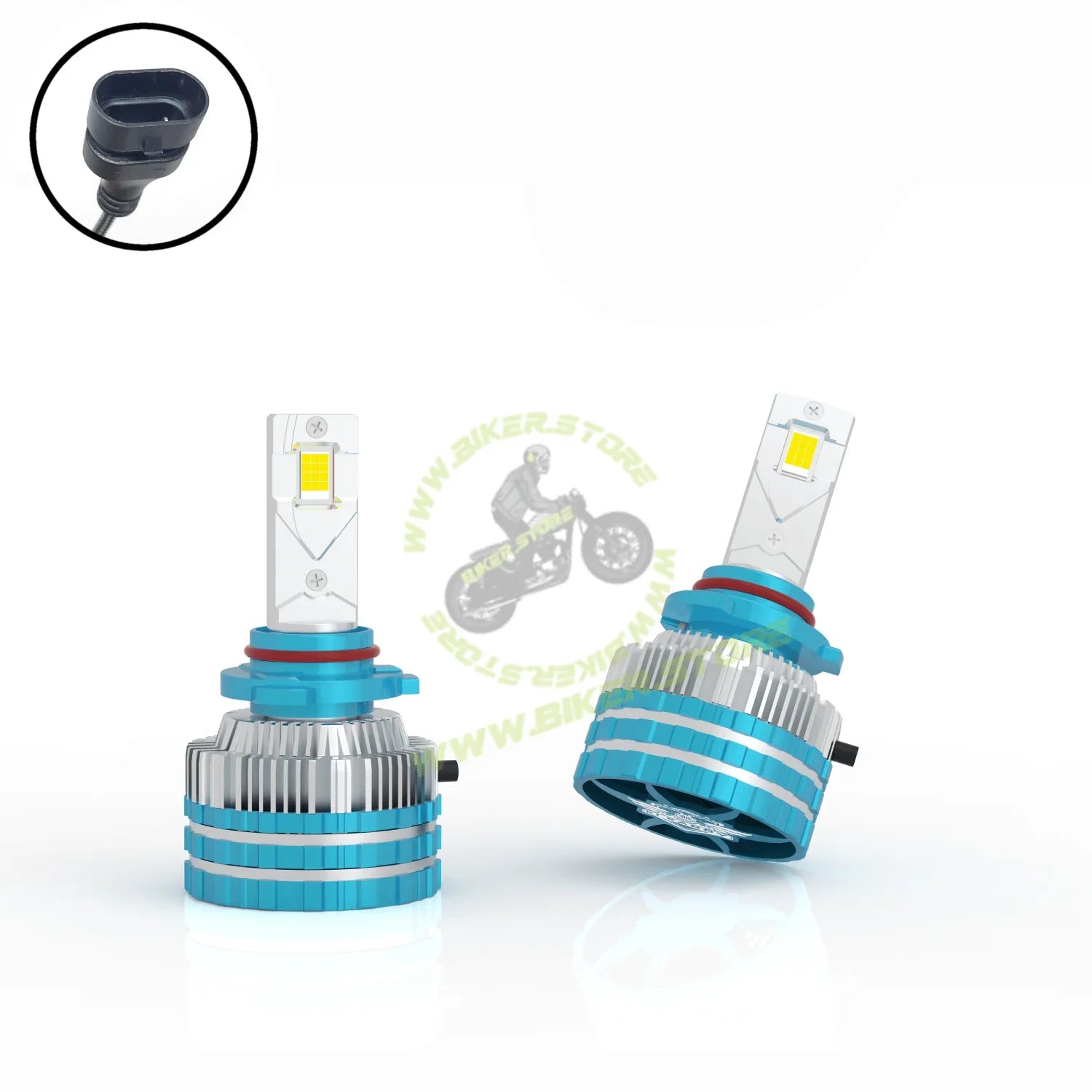
9012 / HIR2 LED Conversion Systems | www.biker.store
Application: Bi-Halogen Projector Headlights (Single-Lens High/Low Beam)
Executive Summary: The Technical Reality of 9012/HIR2 Upgrades The 9012 (HIR2 - Halogen Infrared Reflective) bulb is not a standard halogen. It utilizes a specialized spherical glass capsule with an infrared-reflective coating, forcing the tungsten filament to burn hotter. This achieves approximately 1,870 lumens from a 55W draw—nearly 80% brighter than a standard H4 or H7 halogen. Automakers (e.g., Jeep, Toyota, Hyundai) utilize this high-output source inside bi-halogen projector assemblies, relying on a mechanical shutter to alternate between low and high beam patterns.
The automotive aftermarket consistently misleads consumers regarding 9012 LED upgrades. Replacing an 1,870-lumen factory HIR2 bulb with a generic, low-wattage (20W-30W) LED kit results in a severe degradation of luminous flux. The light output fails to penetrate the thick glass of the projector lens, rendering the upgrade functionally inferior to the stock halogen.
BIKER.STORE strictly provisions high-draw, precision-engineered 9012/HIR2 LED systems. This catalogue mandates units capable of overpowering stock HIR2 output while maintaining exact photometric alignment with the projector's internal optics and mechanical shutter.
Required Engineering Specifications for Projector Integration
-
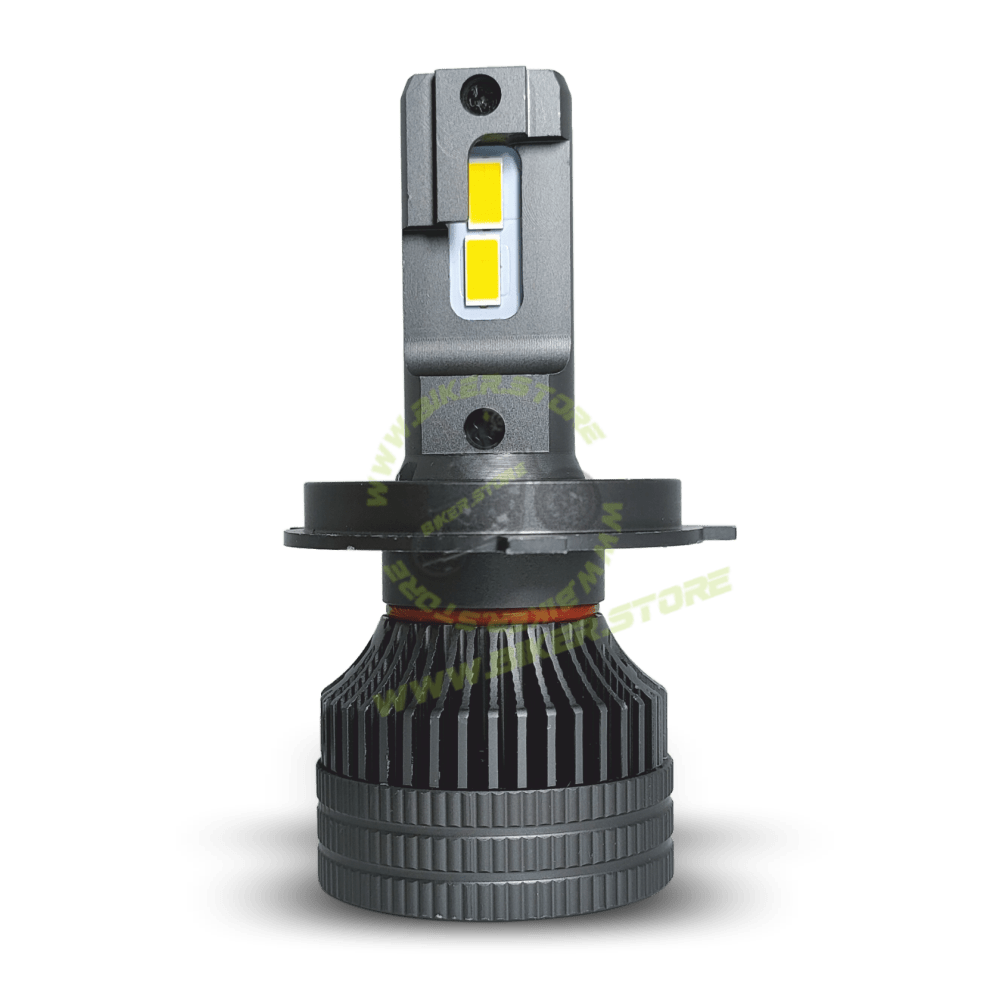
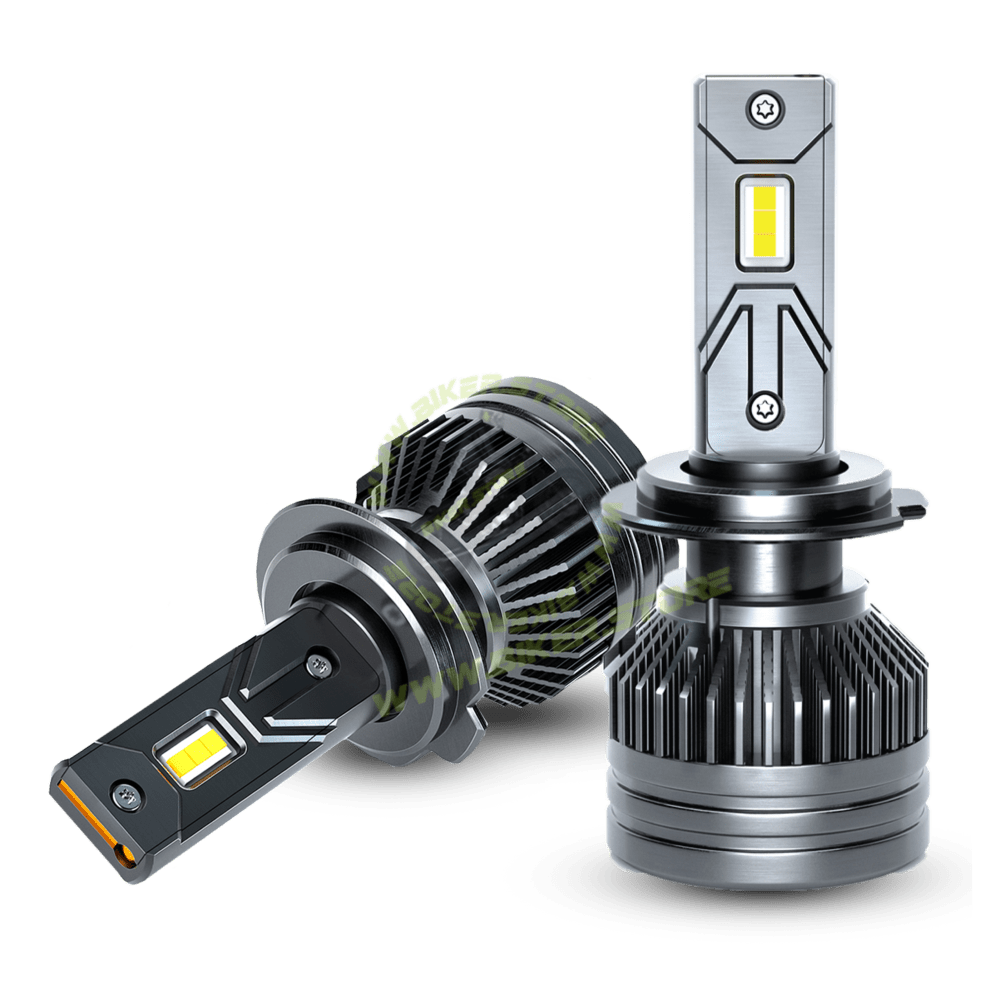
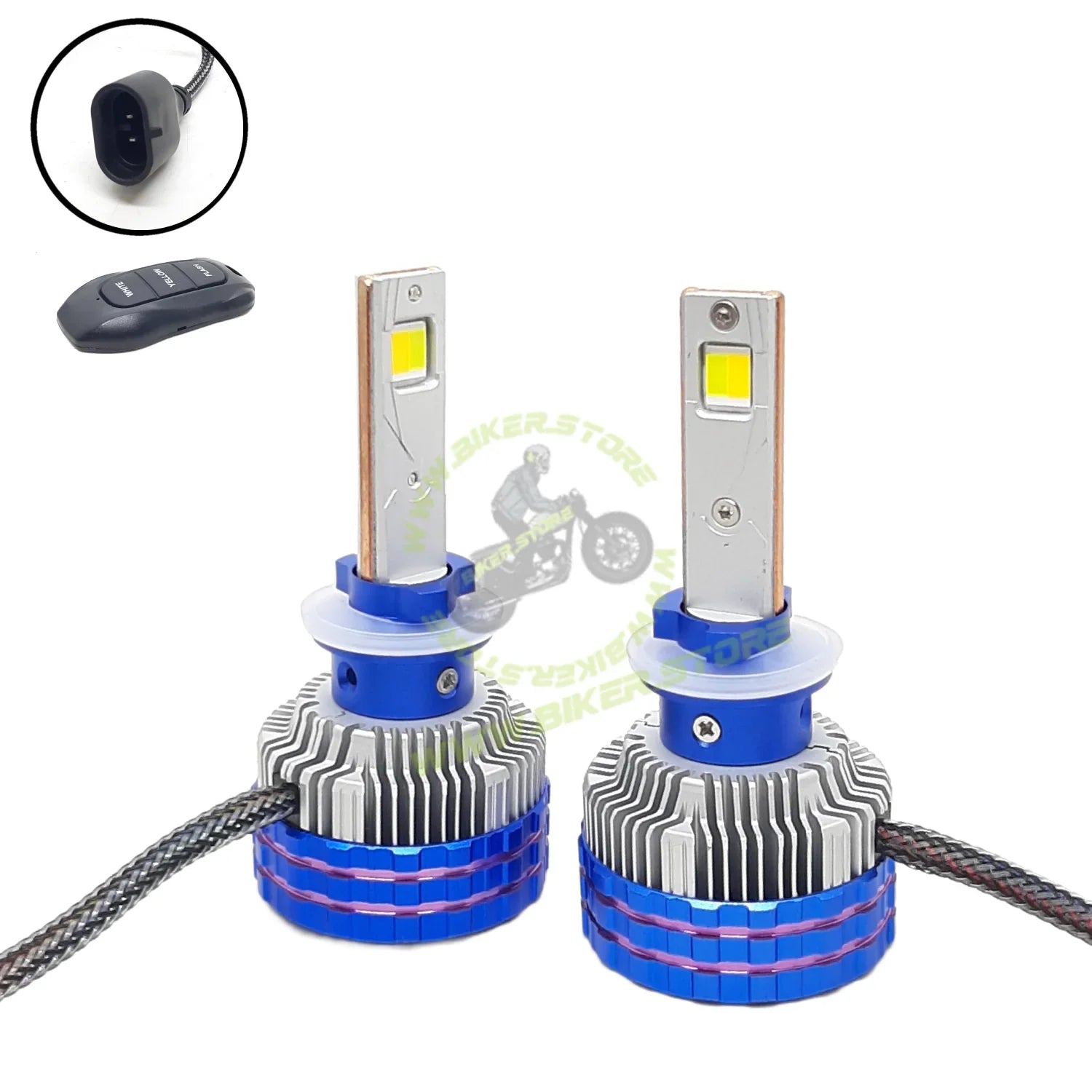
Bi-Projector Optic Alignment: Projector lenses amplify light source geometry. An LED with an excessively thick central copper substrate creates a massive longitudinal shadow (dark spot) down the center of the beam pattern. Our 9012 inventory requires ultra-thin substrates (0.72mm - 1.0mm) and CSP chipsets positioned identically to the original HIR2 filament. This ensures unbroken, uniform light distribution that utilizes the projector’s cut-off shield effectively.
-
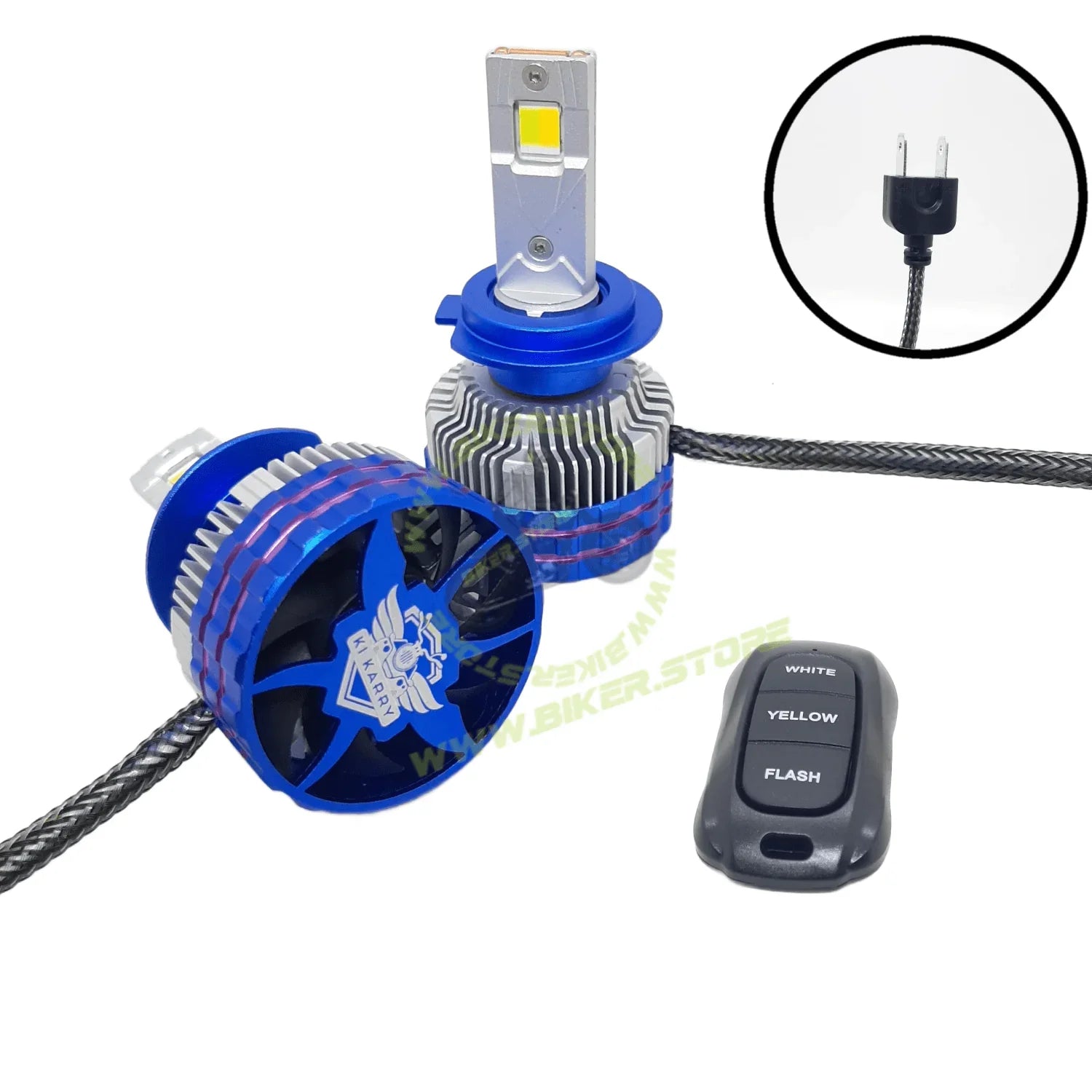
Sustained Luminous Flux Capacity: To surpass a factory HIR2 halogen, the replacement LED must sustain a true power draw exceeding 45W per bulb. Fanless, passively cooled LEDs thermally throttle too quickly to maintain this output. We catalogue exclusively high-output units utilizing aviation-grade aluminum and high-RPM active cooling systems (fans) to prevent thermal derating during prolonged operation.
-
Base Plate Tolerance (9012 vs. 9006): The 9012 base is structurally similar to the 9006 (HB4), differentiated only by a wider top locking tab. Imprecise, injection-molded plastic collars on budget LEDs vibrate loose and fail to compress the weather-seal O-ring. Our catalogue specifies CNC-machined aluminum collars for a secure, vibration-proof lock inside the projector housing.
Technical Specifications & FAQ
Q: Are 9006 (HB4) and 9012 (HIR2) bulbs functionally interchangeable? A: No. Despite visual similarities and a shared right-angled connector, the top retaining tab on a 9012 bulb is wider. Attempting to force a 9006 bulb into a 9012 housing requires modifying the tab and compromises the housing seal. Furthermore, a 9006 halogen produces ~1,000 lumens versus the 9012's ~1,870 lumens. Installing a 9006-equivalent LED into a 9012 bi-projector causes a drastic reduction in visibility.
Q: How does a single 9012 LED bulb execute both high and low beam functions? A: The 9012 bulb operates as a continuous, single-intensity light source. The high/low beam transition is mechanically controlled by a solenoid-actuated metal shutter inside the vehicle's projector assembly. Engaging the high beam drops the shutter, exposing the full projector lens and extending the light throw.
Q: Why does a newly installed 9012 LED appear dimmer than the factory halogen? A: The installed LED is underpowered. Due to the high baseline efficiency of the factory HIR2 halogen, an entry-level 20W-30W LED lacks the luminous flux necessary to match stock output after passing through the projector lens. A high-output, actively cooled LED (45W+ true draw) is a strict requirement for a verifiable improvement.
Q: Will a high-power 9012 LED damage the internal projector shutter mechanism? A: No. A premium 45W-55W LED operates at a significantly lower external surface temperature than a factory 55W HIR2 halogen, which generates intense infrared heat. The LED presents no thermal risk to the chrome reflector bowl or the mechanical shutter assembly.
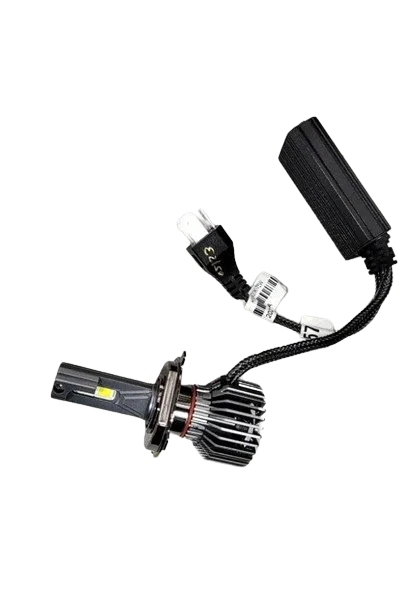
Q: How are "Check Headlight" dashboard errors resolved after installing 9012 LEDs? A: Vehicles utilizing 9012 bi-projectors (e.g., Jeep Compass) often feature sensitive CANbus monitoring systems. The Engine Control Unit (ECU) detects the LED's lower electrical resistance as a burnt-out filament, triggering dashboard errors or severing power to the headlight. Resolving this requires installing a 9012 LED equipped with an advanced internal CANbus decoder or wiring an external load resistor in-line to bypass the diagnostic check.