

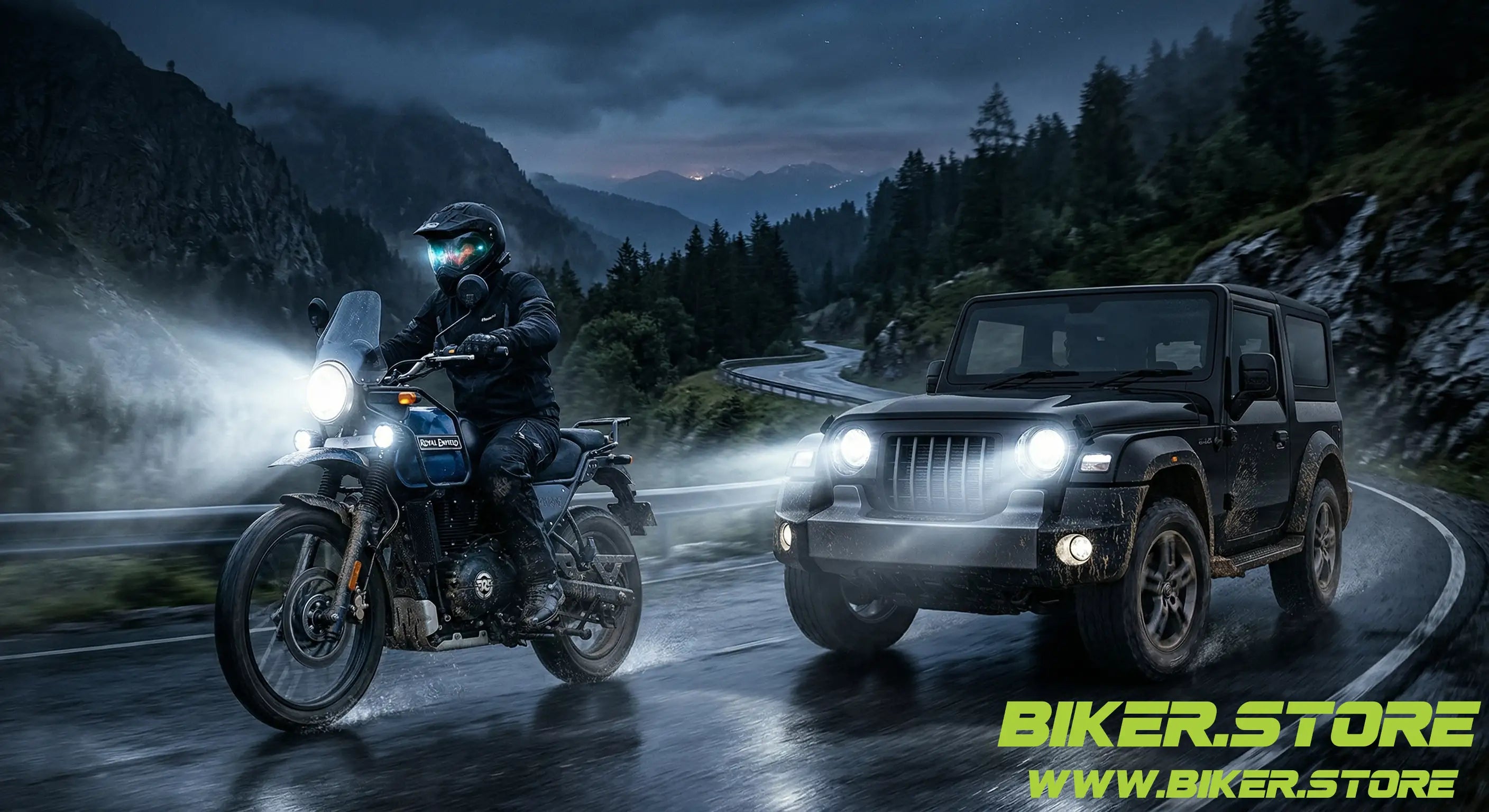
The factory-equipped halogen lighting on most mass-market vehicles is functionally obsolete. Emitting a low-intensity, yellowish beam (typically around 3200K), standard 55W/60W halogens convert the vast majority of their electrical draw into infrared heat rather than usable light. For drivers and riders navigating unlit highways or chaotic urban environments, this constitutes a severe safety liability.
NightEye LED bulbs have dominated the aftermarket as a high-value, high-output solution. Utilizing advanced Bridgelux COB (Chip-on-Board) or CSP (Chip Scale Package) architecture, authentic NightEye systems offer massive gains in luminous flux, dropping color temperatures into the 6500K (Pure White) range while drawing significantly less amperage.
However, bolting an LED into a housing engineered for a halogen filament is not a plug-and-play aesthetic mod; it is an optical and electrical overhaul. This guide breaks down the precise technical requirements for integrating NightEye LEDs into four-wheelers and the mandatory electrical modifications required for two-wheelers.
Four-Wheeler Integration: Optical Geometry and Thermal Realities
Upgrading a car or SUV with NightEye LEDs requires strict attention to the vehicle’s headlight housing and electrical network.
1. Filament Replication and Beam Pattern
The most critical failure of cheap LED bulbs is structural. A halogen bulb produces light from a precise, tiny tungsten filament. If an LED chip is thicker or positioned even a millimeter off from where that filament was, the vehicle’s reflector bowl will scatter the light wildly. This creates a blinding glare for oncoming traffic and leaves severe dark spots directly in front of the vehicle. Premium NightEye series (such as their CSP lines) are engineered with 1:1 filament replication, ensuring the diodes sit exactly where the halogen filament sat, maintaining the factory low-beam cut-off line.
2. Thermal Management Protocols
LEDs do not project heat forward like halogens, but they generate extreme thermal loads rearward at the semiconductor junction. If this heat is not dissipated, the chip will undergo "thermal derating"—automatically dimming itself to prevent catastrophic failure. NightEye units employ aviation-grade 6063 aluminum chassis. Some models utilize passive braided copper belts, while higher-output units use active 10,000 RPM double-ball bearing cooling fans. It is imperative to ensure your vehicle’s headlight dust cap has enough clearance to allow this thermal exchange; sealing a fan-cooled LED in a completely airtight housing will cause premature burnout.
3. CANbus Network Compatibility
Modern automobiles utilize Engine Control Units (ECUs) and Controller Area Network (CANbus) systems to monitor electrical resistance. Because NightEye LEDs draw substantially less power (typically 36W compared to a 55W halogen), the vehicle’s computer will interpret the low resistance as a burnt-out bulb. This triggers dashboard error codes, hyper-flashing, or a complete shutdown of the headlight circuit. When outfitting modern SUVs or European cars, you must verify that the specific NightEye model includes an inline CANbus decoder to normalize the electrical signal.
Two-Wheeler Integration: The AC to DC Conversion Mandate
Installing an LED bulb in a modern, premium motorcycle is straightforward because they utilize stable Direct Current (DC) electrical architectures. However, installing a NightEye LED on older motorcycles, budget commuters, or retro-styled bikes (e.g., older Royal Enfields, Hero Splendors, Bajaj Pulsars) introduces a critical electrical barrier: Alternating Current (AC).
The Technical Problem: AC Destroys LEDs
In an AC headlight system, the headlight draws power directly from the engine's stator (alternator). You can identify an AC system immediately: the headlight only turns on when the engine is running, and the light aggressively flickers and dims at idle, only brightening when you rev the throttle.
An LED is a diode; it strictly requires stable, unilateral Direct Current (12V DC) from the battery. If you plug a NightEye LED into an AC stator feed, the fluctuating voltage will cause violent strobing and will permanently fry the LED's internal driver within minutes.
The Solution: Full AC to DC Headlight Conversion
To run a NightEye LED on an AC bike, you must sever the headlight's connection to the stator and reroute it to draw switched power directly from the 12V battery.
Mandatory Execution Steps:
-
Access the Wiring Harness: Open the headlight cowl or trace the wiring loom leading to the right-side handlebar switchgear (where the headlight on/off switch is located).
-
Isolate the Stator Feed: Using a multimeter or the manufacturer's wiring diagram, identify the wire carrying AC power from the stator to the headlight switch (commonly a yellow wire on many Asian commuter bikes, but you must verify).
-
Sever the AC Input: Disconnect or cut this stator feed wire before it reaches the headlight switch. Isolate and tape off the live end coming from the engine to prevent grounding/shorts.
-
Route the DC Feed: You must now supply 12V DC to the headlight switch. Locate a wire that receives DC power only when the ignition key is turned ON (commonly the feed for the brake light switch, horn, or the primary ignition output wire).
-
Bridge the Connection: Splice a new wire from this switched 12V DC source directly into the headlight switch input (the wire you severed in Step 3).
-
Verify Operation: Turn the ignition key ON without starting the engine. Turn on the headlight switch. If the NightEye LED illuminates brightly and steadily without the engine running, the DC conversion is successful.
Engineering Note: You must ensure your motorcycle's stator and rectifier have the capacity to charge the battery faster than the new DC LED draws from it. Since NightEye LEDs typically draw less wattage (36W) than stock halogens (35W/55W), the battery drain is usually negligible, but a weak stator will result in a dead battery over time.
The Reality of Counterfeits
The Indian aftermarket is heavily compromised by visually identical NightEye counterfeits. These knockoffs utilize inferior COB chips, hollow plastic collars instead of CNC aluminum, and lack internal thermal regulation. They will fail within weeks and blind oncoming traffic. Authentic NightEye bulbs feature heavy die-cast construction, serial numbers, and anti-counterfeit QR codes on the ballast or packaging. Sourcing strictly from verified distributors is a non-negotiable requirement.
Frequently Asked Questions (FAQ)
1. How do I definitively know if my motorcycle has an AC or DC headlight system? Turn the ignition key to the "ON" position without starting the engine. If you can turn the headlight on, you have a DC system and can install the LED directly. If the headlight refuses to turn on until the engine is physically running, you have an AC system and must perform a wiring conversion.
2. Will installing a NightEye LED melt my vehicle's plastic headlight reflector? No. Halogen bulbs generate extreme infrared heat forward into the housing, which degrades plastics over time. LEDs are highly efficient and project heat rearward into their aluminum heat sinks. The forward-facing temperature of an LED is significantly lower than a standard halogen bulb.
3. Why is my newly installed LED bulb scattering light everywhere and blinding drivers? You have likely installed the bulb upside down or sideways, or you purchased a counterfeit bulb lacking 1:1 filament replication. The LED diodes must face exactly 3 o'clock and 9 o'clock (horizontal) inside the housing to utilize the reflector bowl correctly.
4. Are 6500K White LEDs better for driving in the rain? Mathematically, no. Pure white 6500K light heavily refracts off water droplets and fog, creating a blinding white wall effect. If you drive in heavy monsoon or foggy conditions frequently, 6500K LEDs will reduce your visibility compared to lower temperature (3000K-4300K) yellowish lights.
5. Do I need to cut my factory wiring to install these on a car? No. Authentic NightEye replacement bulbs (H4, H7, H11, etc.) feature factory-matched OEM connector plugs. They are strictly plug-and-play for the physical electrical connection. Cutting factory wiring voids your vehicle's warranty and introduces severe electrical liabilities.
6. Will NightEye LEDs throw a dashboard error on my new SUV? If your vehicle utilizes an advanced digital CANbus system, it likely will, unless you purchase the specific CANbus-ready NightEye models or install an inline CANbus decoder harness between the vehicle plug and the LED bulb.
7. Can I install an LED bulb in a halogen projector lens? Yes, but with caveats. Halogen projectors are designed for 360-degree light emission. Most LEDs emit light from two flat sides, creating a dark shadow down the center of the beam. You must source premium CSP LED bulbs with ultra-thin copper substrates to minimize this shadow effect in projector housings.
8. What is the actual lifespan of a NightEye LED? While marketing claims state 30,000+ hours, the reality in the Indian subcontinent is dictated by heat and vibration. A genuine NightEye bulb installed in a well-ventilated housing with a stable DC electrical system will reliably outlast a halogen bulb by several years. Thermal suffocation or AC voltage spikes will kill them in weeks.
9. Are LED headlight upgrades legal? RTO/MOT regulations dictate that primary headlights must not cause undue glare to oncoming traffic. Dropping a massive, poorly-aligned LED into a reflector housing is illegal and dangerous. The bulb must maintain the factory low-beam cut-off line. Always check local jurisdictional enforcement regarding color temperatures and lumen limits.
10. I converted my bike to DC, but my battery keeps dying. Why? Your motorcycle's stator or voltage rectifier may be failing, or the specific bike's charging system is mathematically too weak to support a constant 12V draw without the engine operating at high RPMs. You must test the battery voltage with the engine running; it should read between 13.5V and 14.4V. If it reads lower, your charging system cannot support the DC conversion.
Browse the entire NightEye range on www.biker.store here


Share:
Beyond Factory Illumination: A Technical Guide to Auxiliary Lamps and Fog Lights